


In music theory, a scale is a specific series of notes played between two pitches - these can be literally any two pitches, and any notes between them, and we can base the music we create and play on the notes of these scales. Although these possible scales are theoretically limitless, there are a number of already established and named scales - or journeys between two notes - and it’s these that almost all of the music we hear is based on. You’ll probably have already heard of a few, like the Major and Minor scales.
The scales used in Western Music are almost always formed between two notes of the same pitch class / name (ie two ‘D’ notes, or two ‘F#’ notes) which are an octave apart. A practical example would be if we take any ‘C’ note on the piano, and then find the next ‘C’ up in pitch on the piano (this distance is an octave), the notes we play in a journey between these two ‘C’ notes would be called the ‘scale’.
Perhaps the most obvious possible scale is the ‘Chromatic Scale’, which simply plays every single note, black and white, between the beginning and end point of the scale, however the scales that form the foundation of most Western music, from classical to folk, rock, jazz, indie and pop are 8 note scales made from 7 distinct pitch classes. That might sound unnecessarily complicated, but in reality it’s very simple. Let’s use the notes of the C Major scale as an example:
C, D, E, F, G, A, B, C
So in this scale, there are 8 notes total, C-C, and there are 7 distinct pitch classes / names (we have two ‘C’’s, so ‘C’ only counts once as a distinct pitch class). The scale is named after the first, or ‘root’, note - the note we begin the scale from, and the quality is named after the formula we followed to get those specific notes, ie Major, Minor, Phrygian.…
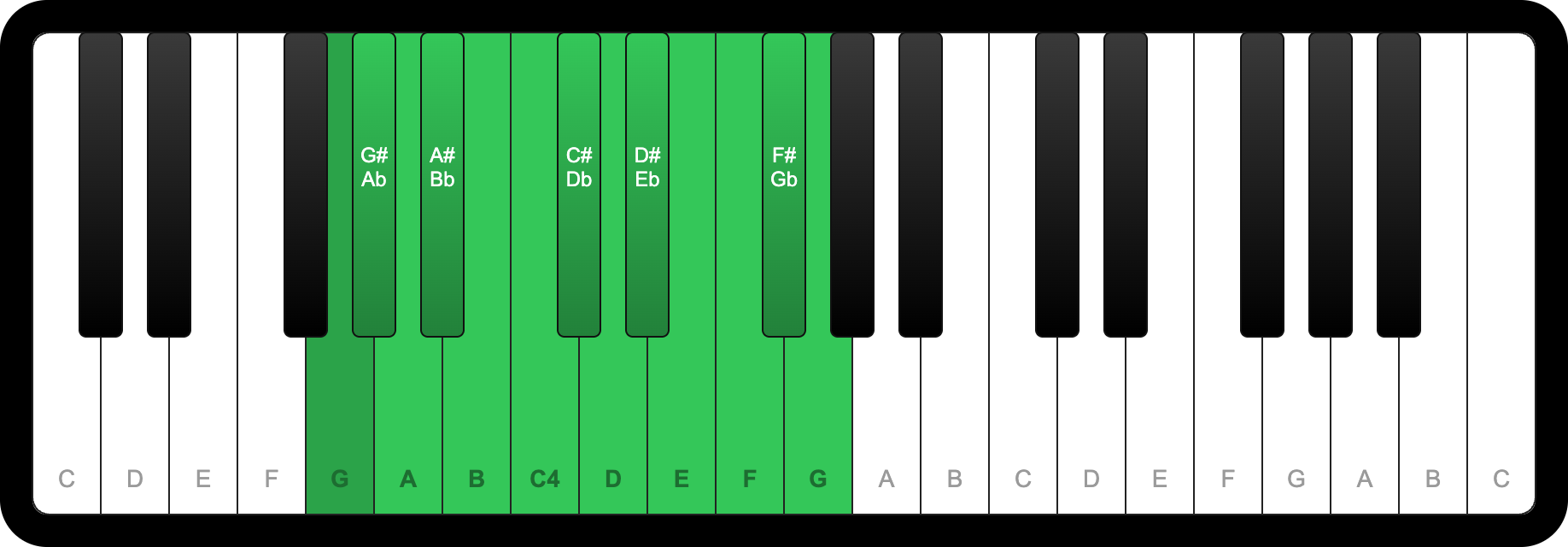
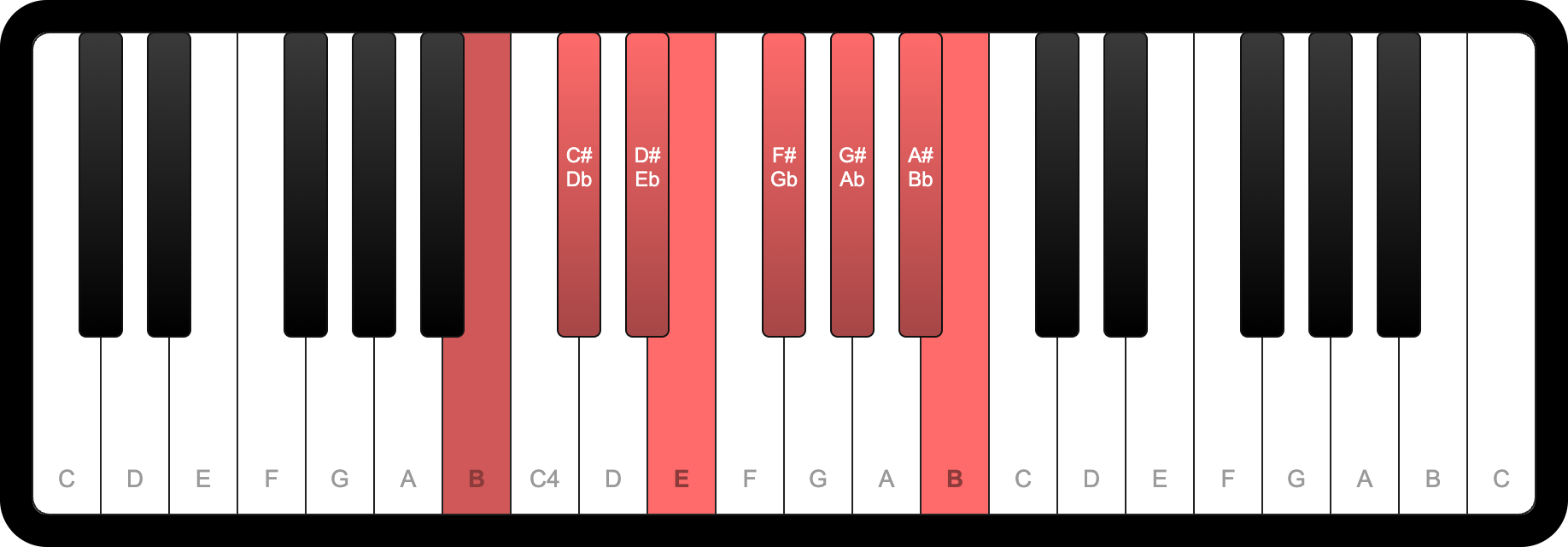
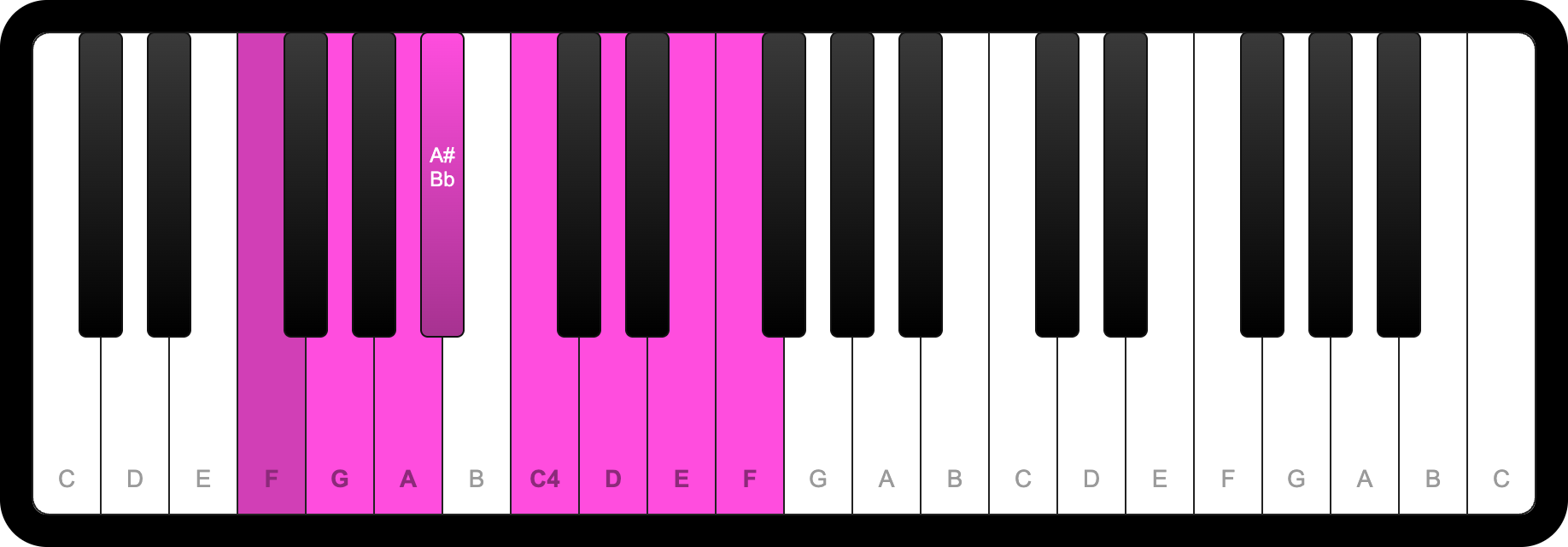

This is absolutely the most crucial thing to understand about scales!
Scales are made from formulas where the interval (distance) between each note is predetermined.
All same named scales (ie all Major Scales) share their own specific formulas. Ie there is a Major Scale formula, a Minor Scale formula etc..
The formulas remain the same no matter what note we begin on.
We begin on a note, then follow the formula from one note to the next until we make the entire scale.
These formulas are usually made from intervals of tones (T) and semitones (S).
Because the formula remains the same no matter what note we begin on, every same name scale (ie all Major scales) will always have the same interval / distance between the 1st and 2nd notes, 2nd and 3rd notes, 4th and 5th notes etc, and also between non-consecutive notes, ie between the 1st and 5th notes, 3rd and 6th etc..
These shared intervals between notes are what gives scales their tonal qualities, and is why all ie Major Scales sound similar.

Like other named scales, the Major Scale has it’s own specific formula of tones and semitones. This formula is:
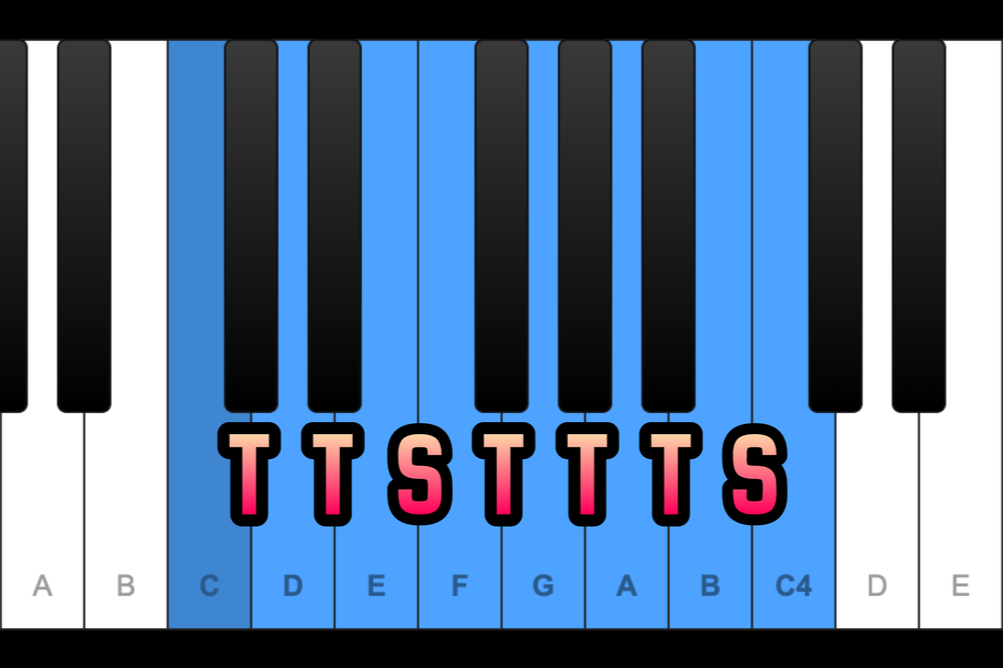
T T S T T T S
This means that we pick a note to begin on, then move up a tone to the next note, then another tone, then a semitone, then a tone, another tone, another tone and a final semitone. Following this formula we will always end up on the note exactly an octave above the note we began on.
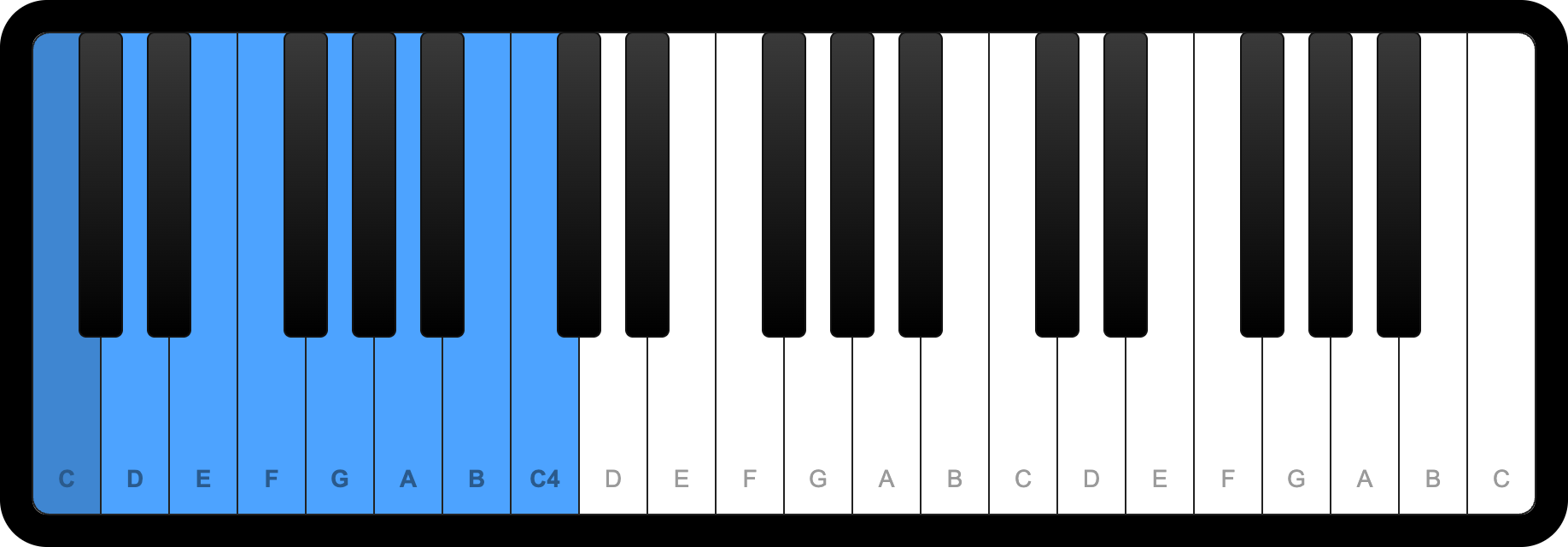
Let’s use this formula to look at the C Major scale. We previously said the notes of the C Major scale were:
C, D, E, F, G, A, B and C
Which when displayed as one octave appear like this:
We can write our formula to replace the note names with scale degrees (numbers for each note):
1st (+T) 2nd (+T) 3rd (+S) 4th (+T) 5th (+T) 6th (+T) 7th (+S) 8th
If we begin on C, and follow the formula through we get:
C + 1 Tone = D
D + 1 Tone = E
E + 1 Semitone = F
F + 1 Tone = G
G + 1 Tone = A
A + 1 Tone = B
B + 1 Semitone = C
So..
C (+T) D (+T) E (+S) F (+T) G (+T) A (+T) B (+S) C
=
C, D, E, F, G, A, B and C
Hooray - it works! It just so happens that this formula creates a scale that uses only the white notes, which is why C Major is generally one of the first Major Scales you are likely to learn, and why playing music in the key of C Major (which means we are constrained to the notes of C Major, ie only the white notes) is easier comparatively than other Major Scales. All other Major scales will have at least one sharp or flat.
We can visually show this Major Scale formula and it’s arrangement of tones and semitones in the C Major scale like this:

Let’s take our Major Scale formula, TTSTTTS, and apply it to other starting notes!
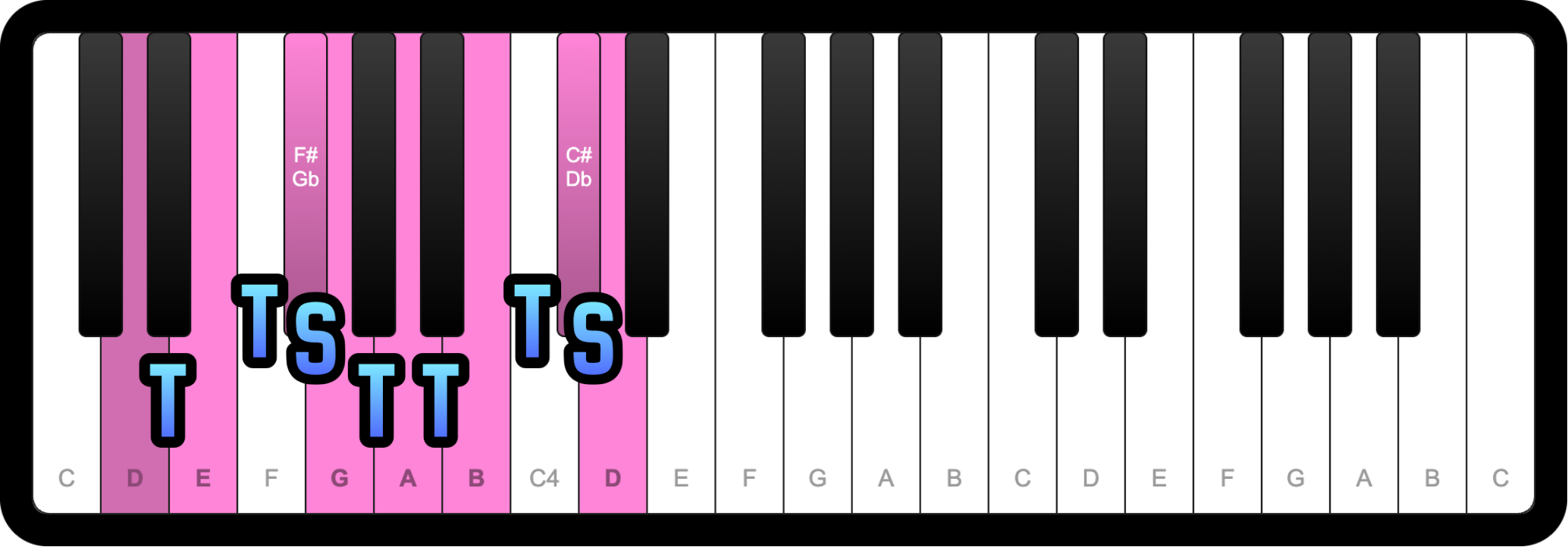
D Major:
D (+T) E (+T) F# (+S) G (+T) A (+T) B (+T) C# (+S) D
D, E, F#, G, A, B, C#, D
E Major:
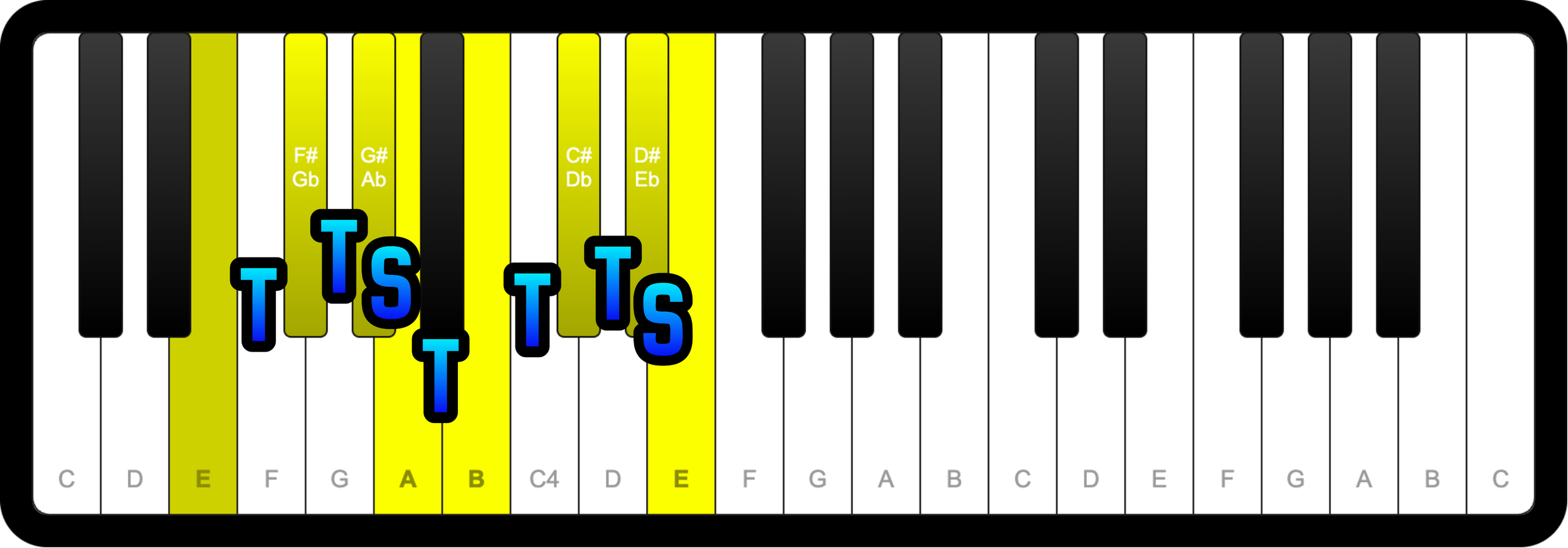
E (+T) F# (+T) G# (+S) A (+T) B (+T) C# (+T) D# (+S) E
E, F#, G#, A, B, C#, D#, E
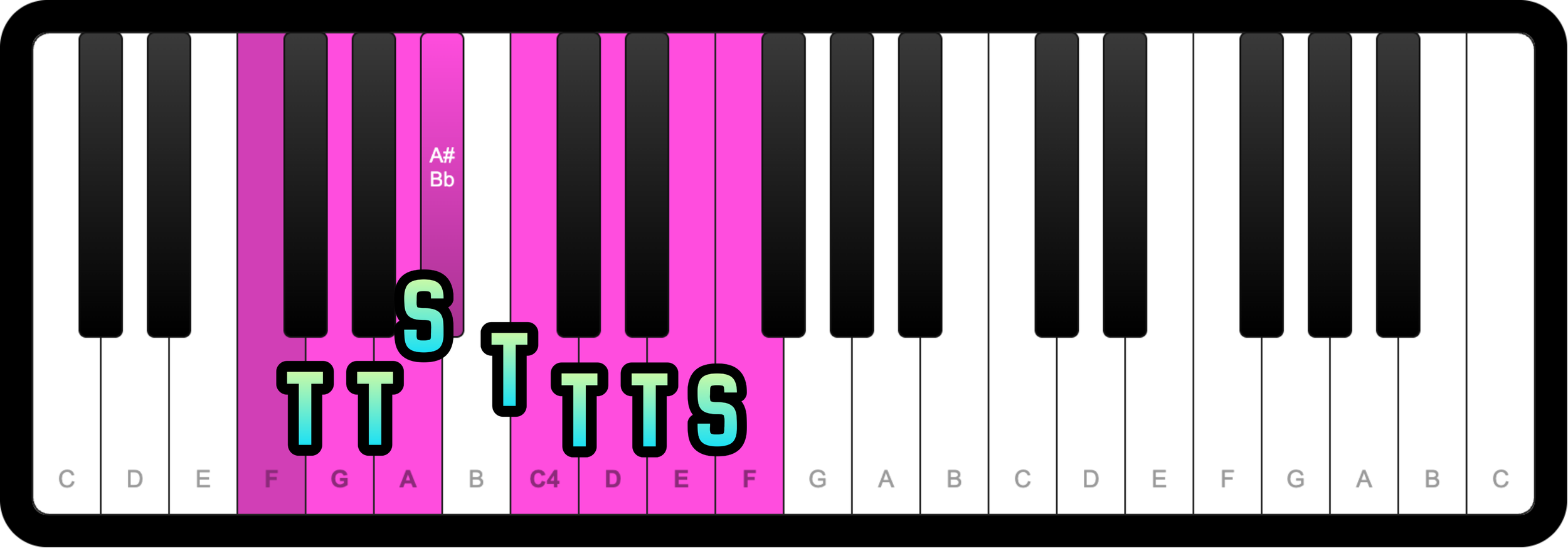
F Major:
F (+T) G (+T) A (+S) Bb (+T) C (+T) D (+T) E (+S) F
F, G, A, Bb, C, D, E, F
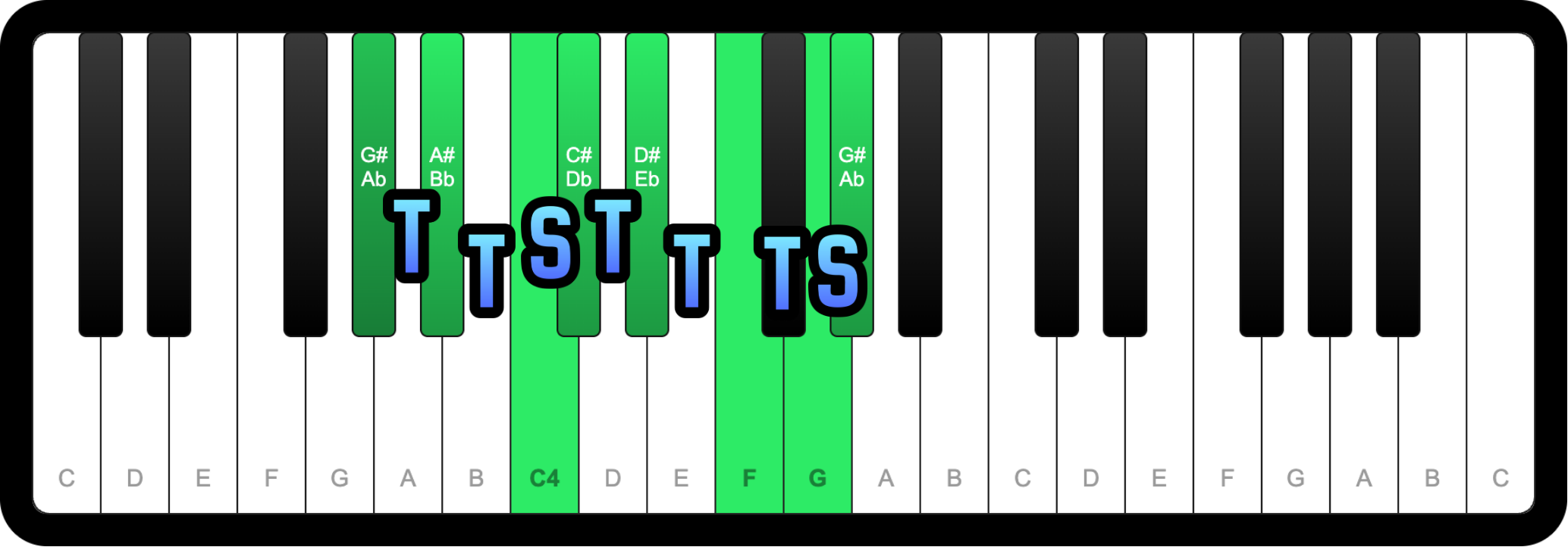
Ab Major:
Ab (+T) Bb (+T) C (+S) Db (+T) Eb (+T) F (+T) G (+S) Ab
Ab, Bb, C, Db, Eb, F, G, Ab